Airbnb Tips for Slow Season: Boost Bookings and Protect Your Revenue

Key takeaways
The Airbnb slow season is a market-level demand shift, not a listing quality problem. Slow months affect similar properties in your area and vary significantly by location, property type, and guest mix.
Professional hosts must balance nightly rate reductions with occupancy-driving promotions to maintain profitability. Setting a minimum price on your Airbnb property protects both revenue and your review profile heading into peak season.
Your peak-season guest won't travel in your slow season. Reducing minimum nights to one night and enhancing guest experience are two of the lowest-cost ways to get more bookings from these segments.
Multi-channel expansion, including social media, is one of the most reliable ways to boost bookings during slow season, but only with real-time calendar sync across every platform. Without it, the double booking risk on your Airbnb property outweighs the visibility gain.
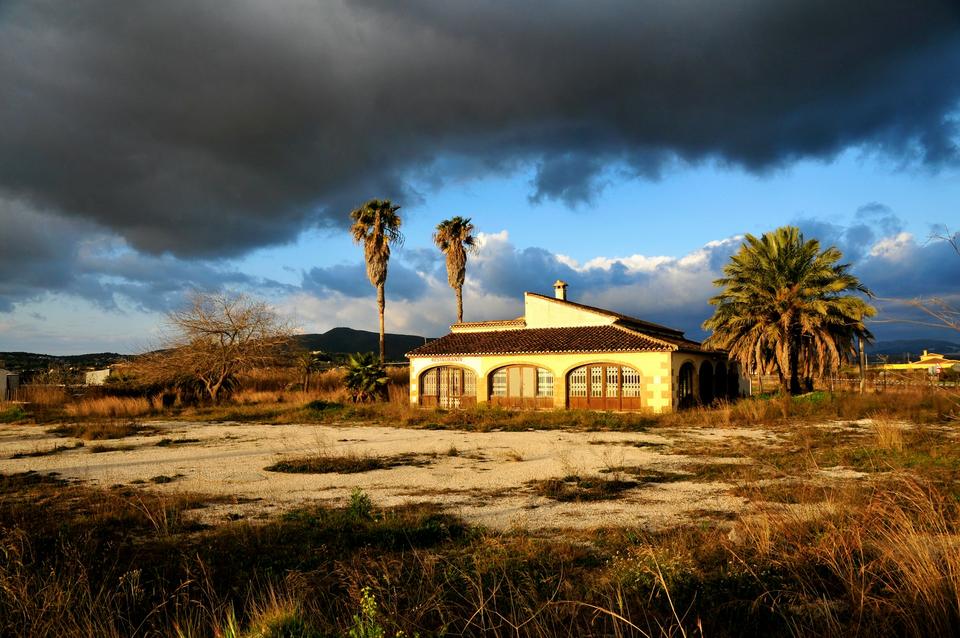
Every short-term rental market has a slow season or low season. For Airbnb hosts, it might arrive in January, in the six weeks after Labor Day, or in the shoulder months either side of ski season. The dates shift by market, but the experience is consistent: travel slows, bookings thin out, and the calendar starts showing gaps that didn't exist two months ago.
The instinct during low season is to discount: drop the nightly rate and hope occupancy follows. It sometimes works, but it's rarely the whole answer. The Airbnb hosting strategies that actually protect revenue during slow season are more deliberate than that: adjusting pricing with the right triggers and the right floor, targeting the guests who genuinely travel during quieter months, expanding to multiple channels without creating double booking risk, and using the downtime to build systems that compound when peak season returns.
These Airbnb tips for slow season are written for property managers who treat quiet periods as a competitive advantage because the hosts who finish slow season stronger than they started aren't the ones who discounted hardest. They're the ones who priced smarter, targeted better, and operated more efficiently.
Stop leaving revenue on the table during slow season. Hostaway helps property managers automate pricing, sync calendars across every channel, and keep bookings coming in year-round. See how it works.
What Is the Airbnb slow season?
The Airbnb slow season is the period when guest demand in your specific short-term rental market drops below its annual average, resulting in fewer bookings, longer vacancy gaps, and downward pressure on nightly rates. It is not a fixed period on the calendar: a beachfront vacation rental in Florida and a city apartment in Edinburgh face entirely different slow periods, often at opposite ends of the year.
It's also worth separating slow season from a listing quality problem. If your Airbnb rental occupancy drops during what should be your peak season/busy season, that's a different diagnosis. The slow season is a market-level demand shift that also affects similar listings in your area and not a signal that something is wrong with just your property.
How to identify your Airbnb slow season
Strategy starts with diagnosis. Applying slow-season tactics to the wrong slow periods wastes time and money; knowing exactly when guest demand shifts in your market lets you get ahead of it.
Review your booking history and compare similar listings
Pull your Airbnb rental’s booking records from the past one to three years and look for patterns in monthly occupancy rates, the nightly rates guests accepted, and how far in advance bookings came in. A consistent dip in the same months each year is your slow season signal. If you're a newer host without enough history, track calendar availability on similar listings around you: when comparable properties start opening up, demand is softening.
Watch school calendars, family travel patterns, and local events
When school is in session, destinations that rely on family travel tend to see some of the steepest occupancy drops of the year because most families with school-age children rely on school calendars for when they can travel.
Local events, festivals, and conferences create micro-peaks that can mask an underlying slow period. Strip those out of your data before drawing conclusions about your baseline demand. They're not key strategies for year-round occupancy, they're one-off lifts.
Adjust your pricing strategy during slow periods
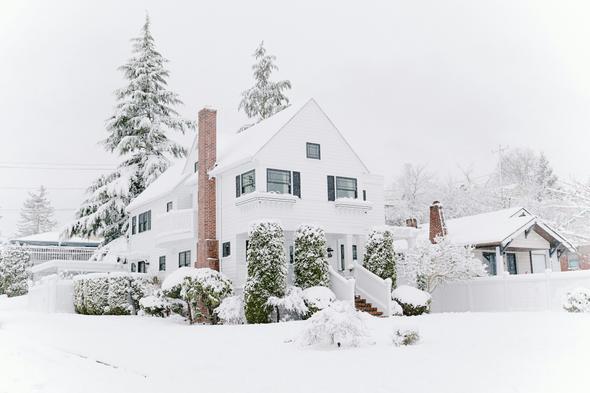
The most common slow-season pricing mistake is treating it as a single lever: just lower the rate and stay competitive. Professional hosts balance nightly rate reductions with offering discounts strategically, because this approach maintains Airbnb revenue rather than just chasing bookings. The goal is to find the right floor and the right triggers, not to race to the bottom.
Use a dynamic pricing tool
Manual pricing across multiple listings during a slow season is where revenue leaks. Market conditions shift daily, and adjusting rates by hand leaves money on the table in both directions: overpricing gaps that could be filled, or underpricing dates that would have booked anyway. Using a dynamic pricing tool takes into account your variable costs, a variety of market conditions and gives you a truly competitive price so you can remain profitable even in low seasons.
Hostaway's built-in dynamic pricing feature adjusts your nightly rates automatically, drawing from billions of data points across demand, competitor pricing, seasonality, day of week, amenities, location, lead time, and more. Rates update every 24 hours, so your calendar responds to market conditions without requiring daily intervention which matters more during slow season, when the margin for error on each booking is narrower. In fact, Hostaway Dynamic Pricing users earn an average of 25.1% more revenue per listing.
Set a pricing floor and stick to it
Dynamic pricing needs a floor, i.e. a minimum price, and a ceiling, i.e. a maximum price.
According to PriceLabs, reducing rates as the booking date approaches is a well-supported strategy across markets and their algorithm applies a gradual discount over the final 15 days before an unbooked date by default, on the logic that each day without a booking reduces the likelihood of filling it. But that decay needs a hard stop.
Hostaway Dynamic Pricing allows you to set minimum and maximum rate boundaries for each listing, ensuring prices never drop below your cost floor or exceed market tolerance. Setting your minimum price is not just an Airbnb revenue protection decision but also a guest quality decision.
Set your floor based on your actual variable costs such as cleaning fees, consumables, and platform commission, and add a meaningful buffer above it. If you're using Airbnb's built-in Smart Pricing tool, it's worth understanding how discounts and promotions affect Smart Pricing before applying slow-season discounts, as stacking promotions on top of Smart Pricing can push your effective nightly rate below your intended floor without an explicit override in your calendar.
Guests booking at extreme discounts for very short stays often generate more wear and tear, lower review scores, and higher cleaning costs. A bad review heading into busy season is a compounding problem. Your minimum price protects your property's reputation, not just your nightly rate.
According to Airbnb's internal data, each 5-star review drives a 3.2% increase in Gross Booking Value and a 4.6% increase in future bookings the following year. A review profile built during slow season carries directly into peak season visibility. So your minimum price is as much a review protection decision as a revenue one.
Offer discounts for longer stays and last-minute deals
Longer stays reduce turnover, stabilize cash flow, and tend to attract more reliable guests. Offering discounts for longer stays such as a 10% weekly discount or 15–20% for monthly stays is a low-friction way to fill calendar gaps without the operational cost of back-to-back short stays.
Each booking requires the same effort regardless of its length, so a 20-night stay at a moderate discount almost always outperforms seven consecutive discounted 3-night stays on both margin and operational load.
For last-minute deals, Airbnb's built-in discount tools help: discounts of 10% or more trigger a visible callout in search results alongside your original crossed-out price, improving visibility and click-through without requiring manual repricing. Removing extra person fees during slow periods is another low-effort adjustment. It doesn't change your base rate but removes a barrier for groups who might otherwise filter your listing out.
Adjust calendar availability to fill gaps
How you adjust calendar availability during slow season has a direct impact on how many bookings you capture, and how cleanly you manage them across channels.
The right adjustments reduce friction for potential guests at the point of booking, shorten the gaps between check-in dates that quietly drain occupancy, and protect you from the double bookings that become more likely when you're listing across multiple platforms to compensate for lower demand. These aren't dramatic changes but small calendar decisions compound quickly when every booking counts.
Reduce minimum nights and shorten advance notice
A three-night minimum that protects your margins during peak season becomes a barrier during slow season. Reducing minimum nights to one or two, particularly on weekdays, opens your calendar to potential guests who won't plan a week in advance: spontaneous travelers, couples on short breaks, last-minute bookers.
Pairing a reduced minimum with same-day or next-day advance notice means you can capture bookings that competitors with longer lead-time requirements will miss. Self check-in makes this operationally viable without adding to your workload.
Offer flexible cancellation policies
Guest confidence drops when demand is uncertain. Flexible cancellation policies reduce the perceived risk of booking and directly increase your conversion rate from listing views to more bookings during slow periods.
For individual hosts, this is a straightforward trade-off: flexible cancellation attracts more guests but introduces exposure to late cancellations. During slow season, when demand is already soft, the incremental bookings typically outweigh the cancellation risk, particularly if you pair flexibility with a shorter minimum stay, so a late cancellation can be re-listed and filled.
For property managers operating at scale, the calculus is more complex. Applying a blanket flexible policy across a portfolio without visibility into which listings carry the most cancellation risk, or without automated re-listing workflows when cancellations come in, creates operational exposure that individual hosts don't face.
At that scale, the right approach is to set cancellation policies at the listing level based on historical cancellation data per property, and to ensure your property management system flags and automatically re-opens cancelled dates across all channels simultaneously. Hostaway's unified calendar and real-time channel sync means a cancelled reservation doesn't leave a ghost availability gap on one platform while others remain blocked: a common and costly failure mode for multi-property operators managing channels manually.
Target new audiences to attract guests
Your peak-season guest profile probably won't travel in your slow season. Families with school-age children are tied to school breaks. Weekend leisure travelers disappear when the weather turns. The question isn't "how do I attract more of the same guests" but "who actually travels during my slow season, and does my Airbnb property suit them?"
Court digital nomads and remote workers with monthly stays
Remote workers and digital nomads travel year-round and actively look for extended stays that combine comfortable living with a reliable workspace. They fill midweek gaps that leisure travelers ignore, book longer, and tend to be low-maintenance guests.
What to highlight in your Airbnb listing: fast, tested Wi-Fi speeds, a dedicated desk or workspace, flexible check-in and check-out, and proximity to cafes or co-working spaces if relevant. A monthly discount of 15–20% is the standard conversion lever for this segment: they're comparing your vacation rental listing against monthly apartment rentals, so price-to-value framing matters.
Consider whether your property suits off-season family travel
Most families with school-age children are locked to school holidays, which is why family travel falls sharply during slow season. But families with children under five have no such constraint and they are an underserved, high-conversion segment for hosts whose Airbnb properties are the right fit.
The qualification matters. This strategy makes financial sense for smaller properties, i.e. one- or two-bedroom units in year-round markets where couples with young children are already part of the guest mix. It does not make sense for a six-bedroom beach house whose peak-season revenue depends on large group bookings: the investment in baby amenities won't move the needle, and marketing to toddler families may actively conflict with your primary listing positioning.
If the fit is right, the investment is relatively modest and the return is disproportionate. A portable travel crib, a booster seat, and a few baby-safe kitchen basics are widely available online and don't require significant spend.
Re-engage past guests with a direct offer
Slow season is the highest-leverage moment to convert a past guest who reserved through an OTA into a direct booking relationship. Previous guests already trust your property, you have a genuine reason to offer a competitive price, and a direct booking saves the OTA commission for both sides. The latter is a discount you can pass on without cutting into your margin.
A short, personalized message referencing their previous stay, with a specific slow-season rate and a direct booking link, is one of the highest-ROI actions an Airbnb host can take during a quiet period. It builds a guest relationship that doesn't depend on an algorithm to maintain.

Creative ways to boost bookings and listing visibility
Pricing and audience targeting get you most of the way there. But during slow season, when every booking counts, it's worth investing time in the visibility levers that cost nothing except attention.
Here are some creative ways to Airbnb hosting that can rank you high up in search results and boost bookings.
Optimize your Airbnb title and listing description for the season
Your Airbnb title works harder than any other part of your listing. It appears in search results before a potential guest clicks through, and it's the first filter between your property and theirs. During slow season, update it to reflect the amenities that matter now, not in your high season.
A fire pit, a heated pool, a dedicated workspace, or baby gear are more compelling Airbnb slow season signals than beach access or proximity to a waterpark that's closed. Airbnb's title limit is 50 characters so use them precisely.
Do the same in your Airbnb listing description: add a short section near the top that speaks directly to why your vacation rental property is a strong choice in the current season. Mention any local events happening nearby that could draw visitors. Guests booking further out will scroll past it; guests deciding between two similar listings in the next two weeks will read it.
Expand to multiple booking platforms but protect your calendar
Listing on multiple channels is one of the most reliable ways to boost bookings during slow season. More platforms means more potential guests seeing your property when they're actively searching. The big channels worth prioritizing beyond Airbnb are Vrbo, Booking.com, and Google Vacation Rentals, which reaches travelers who never open an OTA app. There are also niche vacation rental booking sites that can put you in front of highly interest travelers.
What competitors rarely address when giving this advice: multi-channel expansion without a unified calendar creates double booking risk that can damage your standing on every platform simultaneously. The channel manager is what makes this strategy viable rather than dangerous. Hostaway's channel manager syncs your calendar availability in real time across all connected platforms, so when a booking comes in on Booking.com, for example, your Airbnb calendar closes instantly: no manual updates, no gaps, no errors.
Popular social media platforms like Instagram and Facebook can also extend your reach at no cost, particularly for direct bookings. Sharing local event guides, seasonal content, or last-minute availability posts in destination-specific groups drives awareness with an audience that's already thinking about your area.
Connect with local businesses and promote local events
Local businesses are facing the same slow-season pressure you are. A partnership with a nearby restaurant, tour operator, or activity provider to provide a discount code for guests, a mutual referral arrangement, or a mention in your listing description adds perceived value to a stay and can generate bookings from travelers who discover your property through the business rather than through search.
Slow season is when local businesses are most receptive to these conversations, because they're also looking for ways to drive foot traffic during quieter months.
Local events are another underused visibility lever during the off season. Many destinations run events specifically designed to attract guests when tourism naturally dips: winter markets, food and wine festivals, art trails, off-season sports events, or cultural programs that don't make it onto mainstream travel guides.
If something is happening within a reasonable distance of your property, mention it in your listing description and update your title temporarily to reference it if it's significant enough. A guest searching for accommodation near a specific event will find your listing where they otherwise wouldn't, and you attract guests with a concrete reason to travel rather than competing purely on price.
Enhance guest experience to lock in repeat bookings
More bookings during slow season matter less if they don't convert into reviews and return visits. Guest experience during quieter periods is the investment that pays out during peak season: a strong run of reviews accumulated in February carries real weight when your listing appears in June search results against competitors with a thinner recent review history.
During slow season, the specific adjustments that move the needle are tighter communication: proactive check-in messages, faster responses to inquiries, a personal local recommendation or two that a guest wouldn't find on a generic guide. And small amenity upgrades that signal care without requiring significant spend. A welcome basket with local products, better coffee, a curated list of off-season events nearby. These details show up in reviews in language that directly influences future guest demand.
For Airbnb hosting at scale, consistency across the portfolio matters as much as quality at the individual property level. Automated guest messaging ensures that every guest across every listing gets the same standard of communication regardless of how quiet the period is, which is exactly when it's easiest to let standards slip. Hostaway customers are not only able to automate up to 90% of guest communication but save up to 150 hours per month by doing so.
Use slow season to invest in your listing's long-term performance
The hosts who pull ahead during slow season aren't always the ones who discount the hardest. They're the ones who use quieter periods to make the upgrades that compound when peak season returns because a listing that photographs better, reviews better, and serves a broader range of guests will outperform a comparable property that spent the slow season in a race to the bottom on price.
One of the most practical ways to approach this is with a deliberate amenity refresh. Below is a framework for thinking about where small investments deliver outsized returns:
Amenity category | Off-season upgrade | Why it works |
Outdoor | Fire pit, heated pool, outdoor heater | Extends the usability of outdoor spaces when temperatures drop, and gives guests a reason to choose your property over similar listings nearby |
Indoor | High-speed Wi-Fi, dedicated workspace, blackout curtains | Attracts digital nomads and remote workers who travel year-round and prioritize productivity and rest over amenities that only matter in summer |
Family | Portable travel crib, booster seat, baby-safe kitchen basics | Captures the toddler-family segment — families with children under five who aren't tied to school calendars and actively seek out baby-friendly properties |
Experience | Local event guides, restaurant vouchers, activity partnerships | Provides value beyond the stay itself, generates positive reviews, and differentiates your listing from competitors who offer identical amenities at a lower price |
Not every upgrade applies to every property: a ski chalet and a city studio have entirely different off-season guest profiles. The right question is: who travels to my market during slow season, and what would make my property the obvious choice for them? The amenity refresh framework is a starting point for that conversation, not a universal checklist.
Slow season is also the lowest-risk time to experiment. A fire pit that doesn't generate bookings costs you nothing in lost revenue during a period when the calendar would have been empty anyway. An upgrade that does work gives you new listing content, stronger photos, and a differentiating feature heading into peak season.
Ready to put these strategies to work across your portfolio? Hostaway gives property managers at every scale the dynamic pricing, channel management, and guest messaging tools to turn slow season into a competitive advantage. Start your free demo.
FAQs
When is the Airbnb slow season?
The Airbnb slow season is different for every market; there is no single date that applies universally. The right strategy starts with your own booking history: look for the months where occupancy, nightly rates, and inquiry volume all dip consistently year over year.
Coastal beach rentals often see their slowest months between November and February. Mountain and ski properties tend to slow down in spring and autumn. Urban apartments experience milder dips because business travel and city tourism continue year-round. Your slow months are specific to your location, property type, and guest mix, which is why diagnosis comes before tactics.
Does Airbnb notify guests of last-minute deals?
Yes, in a limited way. When you apply a last-minute discount of 10% or more, it displays a callout on your Airbnb listing page and in search results showing the discounted price alongside the original crossed-out rate. This improves visibility for price-sensitive guests actively browsing for short-notice stays. It does not trigger a direct notification to past guests or users who have previously viewed your listing. For that kind of re-engagement, you need to reach previous guests through a direct message or your own direct booking channel.
Should I enable Instant Book during the slow season?
For most hosts, yes. Instant Book removes friction at the point of booking, which matters more during the off season when a guest comparing two similar listings will often choose the one they can confirm immediately. Instant Book listings rank higher in Airbnb search results, which compounds the visibility benefit at exactly the time you need it most.
The trade-off is reduced ability to screen guests before accepting which is a reasonable concern given that slow-season bookings can skew toward last-minute, lower-rate stays and even attract guests with too high expectations. If you enable Instant Book, use your house rules and guest requirements settings to maintain standards.
How do I avoid double bookings when listing on multiple channels?
The only reliable way to avoid double bookings across multiple platforms is a channel manager with real-time calendar sync like Hostaway. When a booking comes in on one platform, it needs to close your availability on every other platform simultaneously and not on a delay or through manual updates. The failure mode is well-documented: a host lists on Airbnb, Vrbo, and Booking.com, manages calendars manually, and a same-night booking comes in on two platforms within minutes of each other. The reputational cost of cancellations, penalties, and review damage, far outweighs the incremental bookings that multi-channel listing provides.
How do I know when my slow season is ending?
Watch your leading indicators rather than your booking count. Inquiry volume typically picks up before confirmed bookings do. An increase in messages, listing views, and wishlist saves signals that demand is returning even if the calendar hasn't filled yet. Search visibility metrics in your Airbnb hosting dashboard, combined with calendar availability patterns on similar listings nearby, give you an early read on when to start tightening your discounts and returning minimum nights to their peak-season settings.
Getting the timing right on the way out of slow season is as important as the entry as pulling back discounts too late leaves money on the table during the first weeks of returning demand.
Can I use Airbnb slow season strategies on other platforms?
Yes. Most of these strategies apply across any vacation rental booking platform. Adjusting minimum nights, offering extended stays and monthly stays, targeting digital nomads, re-engaging past guests with direct offers, and refreshing your listing copy for the season are platform-agnostic approaches that work on Vrbo, Booking.com, and your own direct booking site.
The main platform-specific elements are Airbnb's discount callout tools and Smart Pricing settings, which are native to Airbnb. For hosts managing listings across multiple channels, the key is applying these tactics consistently rather than optimizing one platform in isolation, which is where a property management system like Hostaway that centralizes pricing, calendar, and guest communication across all channels makes the right strategy scalable across your entire Airbnb property portfolio.
Ready to find out how Hostaway can transform your business?



Validated PCI DSS v4.0.1 Level 1 Service Provider.


